






Home / Entertainment / Hollywood News / Article /
Predator: Badlands movie review: Kindness over toxic masculinity
Updated On: 07 November, 2025 09:11 AM IST | Mumbai | Nandini Shah
The film takes the iconic `80s monster and asks the audience to root for him. The stoic, feeble and outcast predator undergoes character development, turns vulnerable, elicits sympathy and even becomes the butt of jokes. In other words, he no longer remains a predator, stripping the franchise of its identity

Listen to this article :
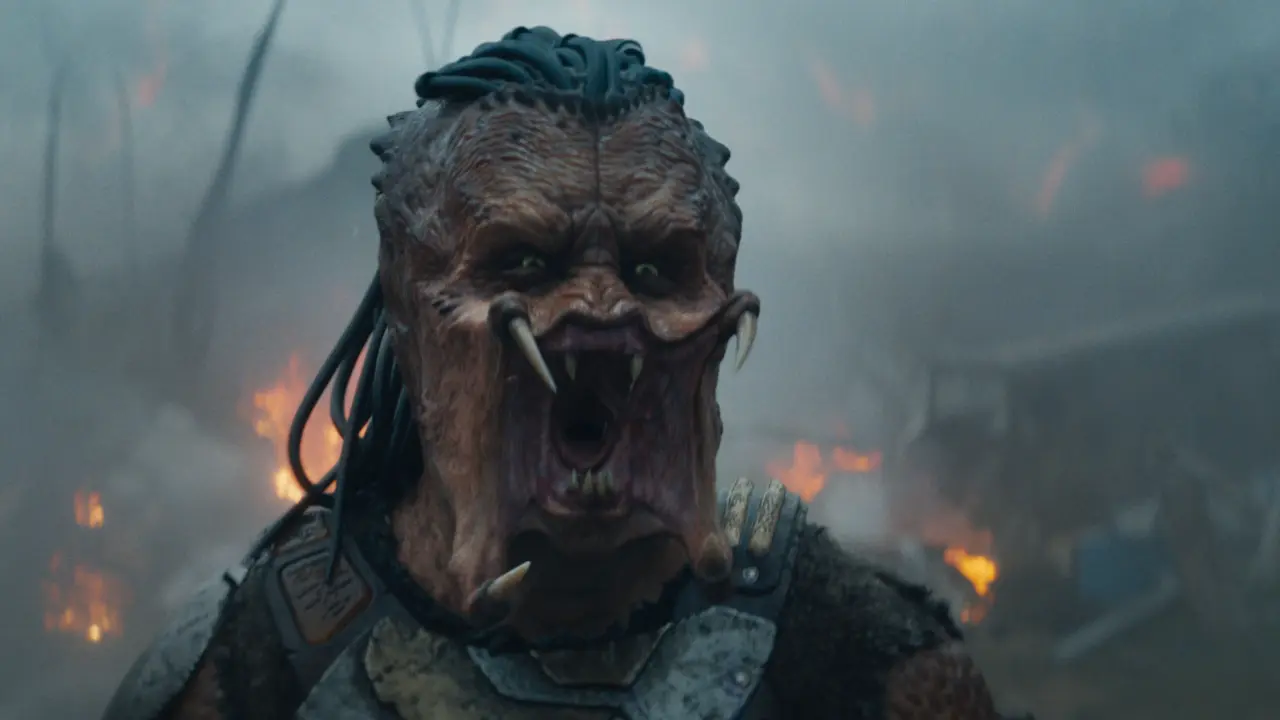
Still from Predator Badlands
Director: Dan Trachtenberg
Cast: Elle Fanning, Dimitrius Schuster-Koloamatangi
Predator: Badlands marks director Dan Trachtenberg`s third foray into the Predator universe and is the seventh film in the overall franchise. With each film, Trachtenberg strives to reinvent the concept by finding an unexplored angle. This time, he attempts his boldest pivot yet - turning the murderous predator into an underdog hero. Trachtenberg distances himself from the franchise’s violent roots. The film begins with the title card "The Yautja are prey to none, friend to none, and predator to all," and spends the rest of its time subverting that statement. While Trachtenberg`s decision to take a new approach is commendable, he unfortunately trades intensity for sentimentality and cliché. This is why I feel the Predator movie, like the Yautja, works best alone.
Brute strength is of utmost importance to the Yautja. The protagonist, Dek (Dimitrius Schuster-Koloamatangi) is the runt of the family, and his father decides to kill him for his weakness rather than live in shame. However, seconds later, he kills Dek`s brother, Kwei, because he shows mercy to Dek. Trachtenberg sets up a promising emotional arc as Dek, ostracised and outcast from his clan, seeks to reclaim his honour by venturing to Genna, the deadliest planet in the universe. There, he hopes to earn his shield by killing the legendary and unkillable Kalisks.
Trending Stories
Latest Photos
Latest Videos
Latest Web Stories
ADVERTISEMENT
Mid-Day Fast
ADVERTISEMENT

ADVERTISEMENT