






Home / Mumbai-guide / Mumbai Food / Article /
As Mumbai's monsoon arrives, all eyes are on ambadi, the Maharashtrian staple
Updated On: 05 July, 2025 08:45 AM IST | Mumbai | Nasrin Modak Siddiqi
Sour, seasonal, and steeped in memory — this sharply sour green vegetable, travels across regions, recipes, and generations

Listen to this article :
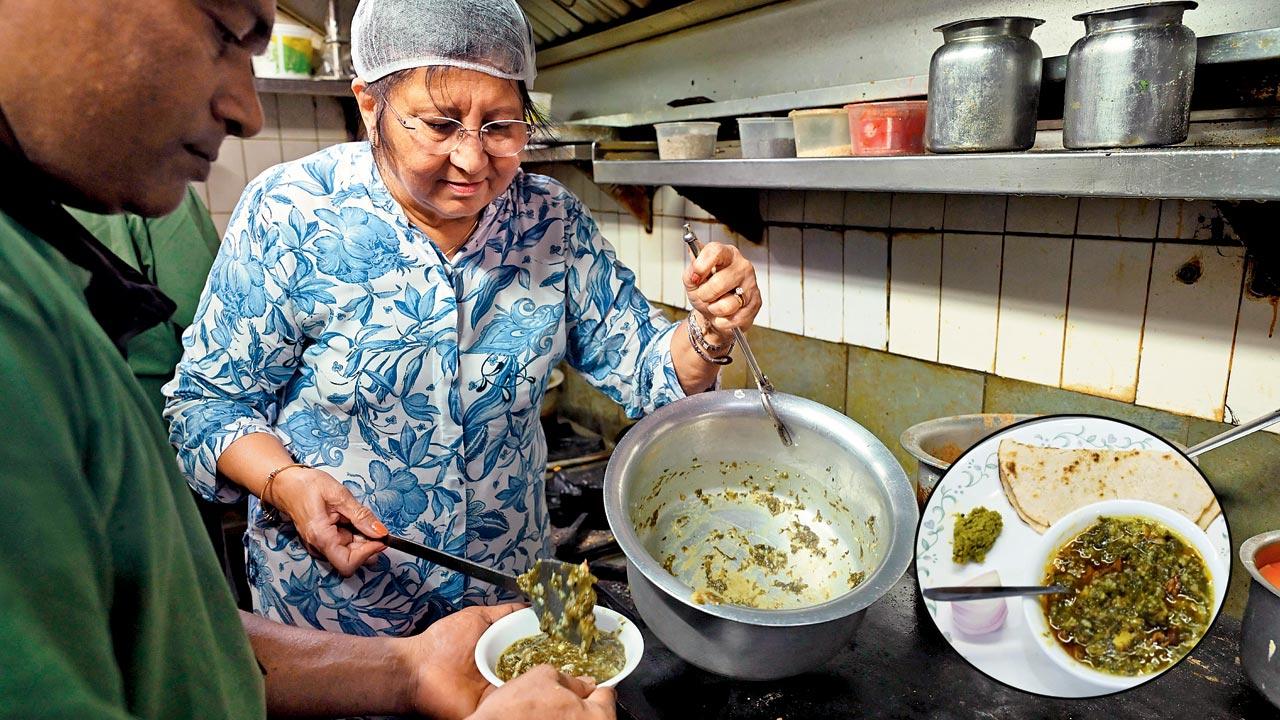
Smita Limaye makes the dish (inset) in the Gypsy Corner kitchen. Pics/Atul Kamble
Last week, a friend shared a photo of his lunch on social media — Ambadi chi bhaji at Gypsy Corner in Shivaji Park. The post came with a memory of his late mother making the dish with love every monsoon. A Maharashtrian staple, ambadi — or sorrel leaves — is a green with a sharp, sour edge.
We reached out to Smita Limaye, who played an instrumental role in making Gypsy Corner — alongside her husband, Rahul in 1986 — come to be known for its traditional Maharashtrian fare. The eatery has built a loyal following over the decades, and on Tuesdays, they serve Ambadi chi bhaji with bhakri — a pairing that’s as seasonal as it’s nostalgic.
 Green, with a sharp sourness, ambadi is available all year round
“The restaurant version is a little different from how I make it at home,” says Limaye. “We Brahmins often add a bit of jaggery, but not everyone prefers that sweet note, so we leave it out at the restaurant.” She also shares her quiet joy in picking fresh vegetables from the local market — “It just makes me happy,” she smiles. In Maharashtra, it is made with rice kani (rice that is washed, dried for a day, and gently pounded until broken) instead of gram flour, which is used in other regions.
At home, Limaye starts making it by cleaning and soaking the ambadi leaves — stems removed — then draining and boiling them for five minutes, retaining just a little of the cooking water. In a hot pan, she heats oil and, in order, tempers mustard seeds, cumin and hing, then adds dried and green chillies. Next, add the drained leaves, six crushed garlic cloves, a pinch of turmeric, and some soaked, cooked peanuts. Finally, she stirs in rice kani with some of the leftover water from boiling the leaves until the mixture reaches a soft, batter-like consistency. A final seasoning of salt — and jaggery, if desired — yields a sal-sal (semi-dry) bhaji that’s perfect with bhakri or simply rice.
Read Next Story
Trending Stories
Latest Photos
Latest Videos
Latest Web Stories
ADVERTISEMENT
Mid-Day Fast
ADVERTISEMENT

ADVERTISEMENT