






Home / Mumbai-guide / Things To Do / Article /
New art exhibition in Mumbai sheds light on rare works by the Tagore household
Updated On: 10 June, 2025 09:17 AM IST | Mumbai | Shriram Iyengar
A new show introduces Mumbaikars to the rare collection owned by members of the Tagore household to shed light on the visionary zeal of the Bengal School of Art

Listen to this article :
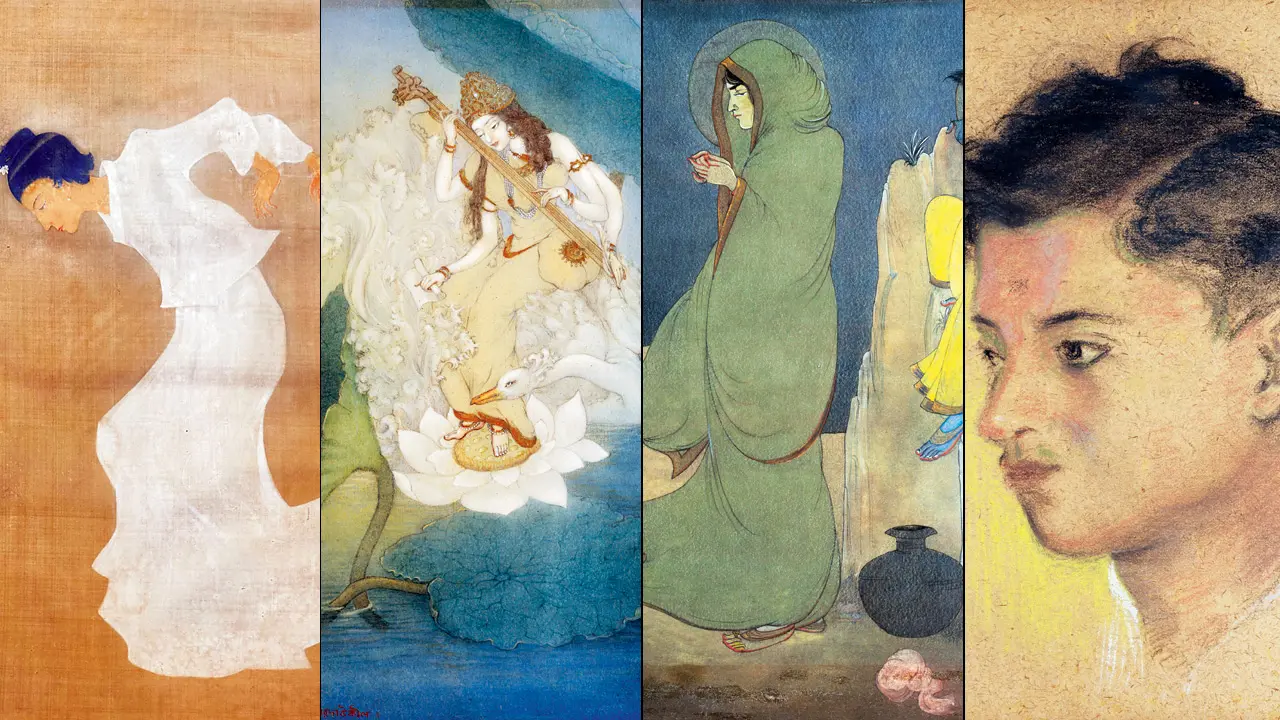
(Clockwise from left) Pwe Dancer, Nandalal Bose, wash tempera on silk; Saraswati, Sarada Charan Ukil, watercolour on paper; Krishna, Kshitindranath Majumdar, gouache on card; Kanu, Abanindranath Tagore, pastel and watercolour on paper. Pics Courtesy/Akara Modern
The Tagores of Jorasanko are the closest comparison to the Medicis that Indian history has produced. Their influence and intellect left an indelible mark on India’s art history. Yet, like the Renaissance, it required fiscal patronage and a vision for the future. The Echoes of Bengal exhibition at Akara Modern will offer a glimpse of some rare works that emerge from the collection of Bengal’s preeminent family.
“The Tagore family was divided into many branches. The Jorasanko branch was the most prominent with the figureheads of Rabindranath Tagore and his nephew Abanindranath Tagore leading the way. However, there was also a branch of the family at Pathuria Ghat in Kolkata involved with business,” explains Puneet Shah, founder, Akara. With his wealth, Raja Prafullanath Tagore established a patronage for artists during this period. “Till the 1930s, his zamindari was the richest in India after the Nizam of Hyderabad and the Maharaja of Cooch Behar,” he explains.

Puneet Shah
Trending Stories
Latest Photos
Latest Videos
Latest Web Stories
ADVERTISEMENT
Mid-Day Fast
ADVERTISEMENT

ADVERTISEMENT