






Home / Mumbai / Mumbai News / Article /
Mumbai Metro Line 3: How does it affect Mumbai's connectivity and economy?
Updated On: 23 October, 2024 03:59 PM IST | Mumbai | Sanjana Deshpande
Urban planners, transport experts, and economists weigh in on the potential impact of Metro Line 3, considering both the immediate benefits and the long-term implications for Mumbai’s growth

Listen to this article :
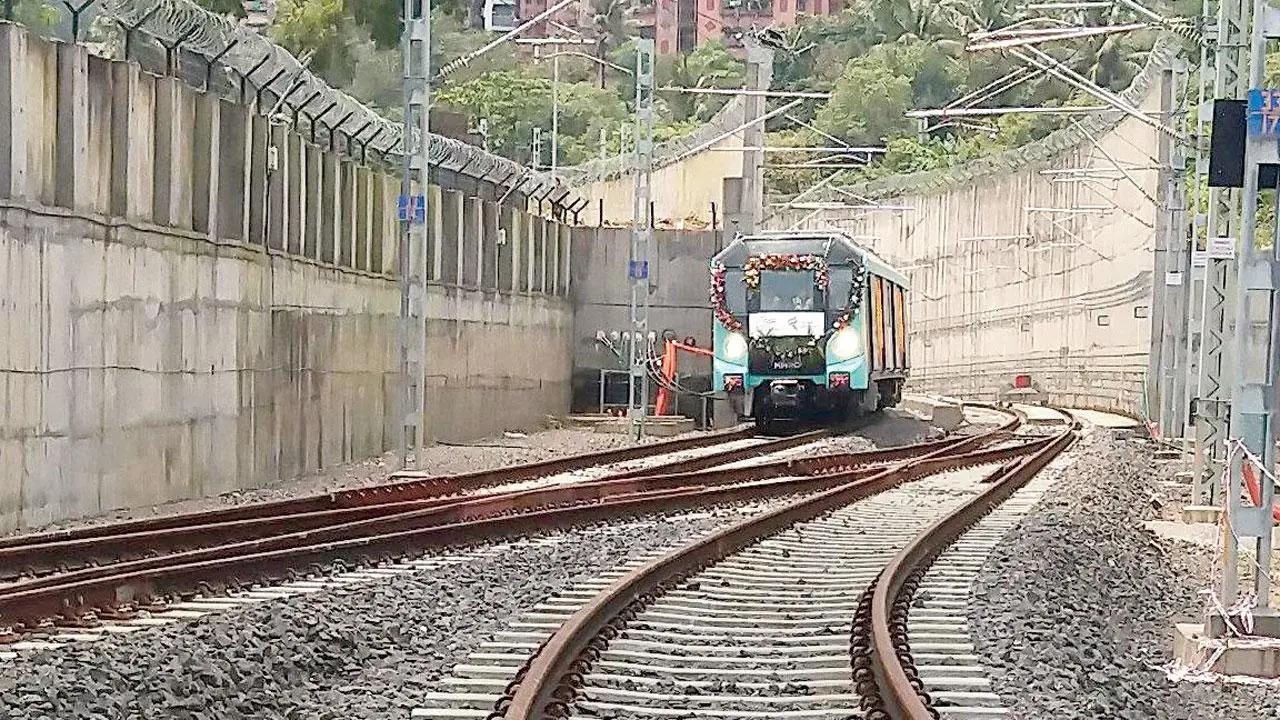
File Photo
India’s financial capital, one of the most densely populated cities, is finally getting the Mumbai Metro Line 3 decades after it was first proposed. The construction for this route, which is also known as Aqua Line or SEEPZ-Bandra-Colaba line, began in 2017 and is finally nearing completion with one phase open for the public.
Phase 1 of Mumbai Metro Line 3–the 12.44-kilometre section between Aarey and Bandra Kurla Complex (BKC)–formally opened to the public on October 6, 2024. Prime Minister Narendra Modi inaugurated this phase on October 5, connecting significant regions such as Aarey, Marol Naka, CSMIA T1 and T2, MIDC, SEEPZ, Sahar Road, Vidyanagari, Dharavi, and BKC.
Nine of the stations are subterranean, with only Aarey above ground. The metro is open from 6:30 AM to 10:30 PM on weekdays and 8:30 AM to 10:30 PM on weekends. Fares range from Rs 10 to Rs 50. Each train has a capacity of more than 2,000 passengers, aiming to provide significant respite to commuters in these congested areas.
Buy now to read the full story.
For any queries please contact us: E-mail: support@mid-day.com
Trending Stories
Latest Photos
Latest Videos
Latest Web Stories
ADVERTISEMENT
Mid-Day Fast
ADVERTISEMENT

ADVERTISEMENT