






Home / Mumbai / Mumbai News / Article /
Mumbai: Wildlife rescuers at SGNP risk lives without insurance coverage
Updated On: 18 July, 2025 09:15 AM IST | Mumbai | Ranjeet Jadhav
Many animal keepers, van majdoors (forest workers), fire watchers, and rescue team members are employed on a daily wage basis. Wildlife experts agree that insurance coverage would significantly benefit them

Listen to this article :
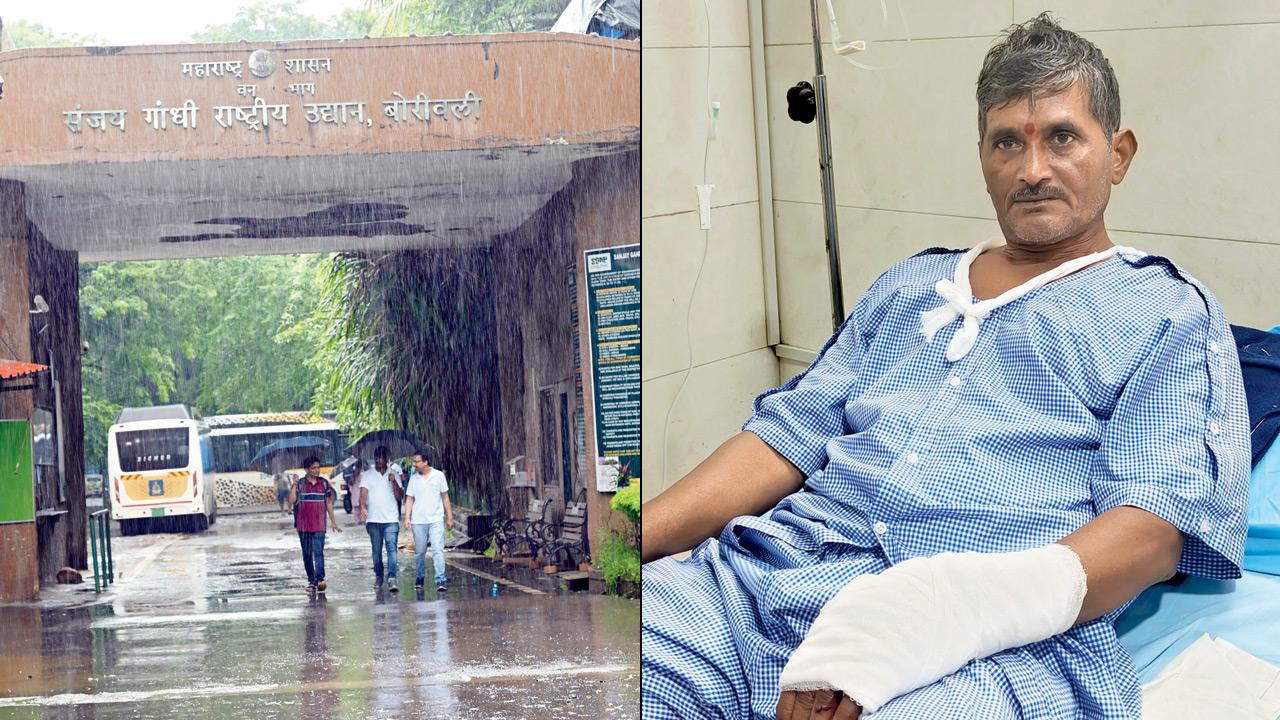
SGNP in Borivli. File pic/Satej Shinde; (right) rescue team member Rajendra Bhoir sustained serious injuries while rescuing an Indian Marsh Crocodile. PIC/BY SPECIAL ARRANGEMENT
Following two recent incidents where a Sanjay Gandhi National Park (SGNP) animal keeper was injured, once while treating a captive tiger and another time during the rescue of a crocodile, wildlife conservationists are calling for insurance coverage for these frontline workers. Currently, temporary forest department staff and wildlife rescue team members operate without accident or medical insurance, despite regularly putting their lives at risk. Last week, rescue team member Rajendra Bhoir sustained serious injuries while rescuing an Indian Marsh Crocodile from a ditch near Kanheri Caves. The crocodile bit his upper arm, requiring stitches.
Honorary Wildlife Warden Rohit Mohite said, “SGNP rescue team members are frontline staff who risk their lives to save wildlife. Unfortunately, they have no accident, life, or medical insurance. We urgently need to provide these workers with coverage similar to what fire brigade officials and others with occupational hazards receive. Most of them are daily wage earners with low salaries. Insurance that covers medical expenses, death, or permanent disability during rescue operations would greatly reduce their financial burden.”
Many animal keepers, van majdoors (forest workers), fire watchers, and rescue team members are employed on a daily wage basis. Wildlife experts agree that insurance coverage would significantly benefit them. A source in the Maharashtra Forest Department told mid-day that these workers should be covered under occupational hazard-specific policies. Standard life or medical insurance policies may not cover incidents arising during high-risk rescue operations, as auditors might reject claims due to the inherent occupational risks.
Trending Stories
Latest Photos
Latest Videos
Latest Web Stories
ADVERTISEMENT
Mid-Day Fast
ADVERTISEMENT

ADVERTISEMENT