






Home / Mumbai / Mumbai News / Article /
Progressive Supranuclear Palsy: small brain damage, massive life impact
Updated On: 23 July, 2025 09:31 AM IST | Mumbai | Vinod Kumar Menon
Brain donation is an empowering and deeply meaningful act, one that could pave the way for future PSP treatments. But this potential hinges on awareness and early planning. In India, brain donation for research is a little-known option. Families often face confusion, legal ambiguity, and difficult decisions during an already painful time

Listen to this article :
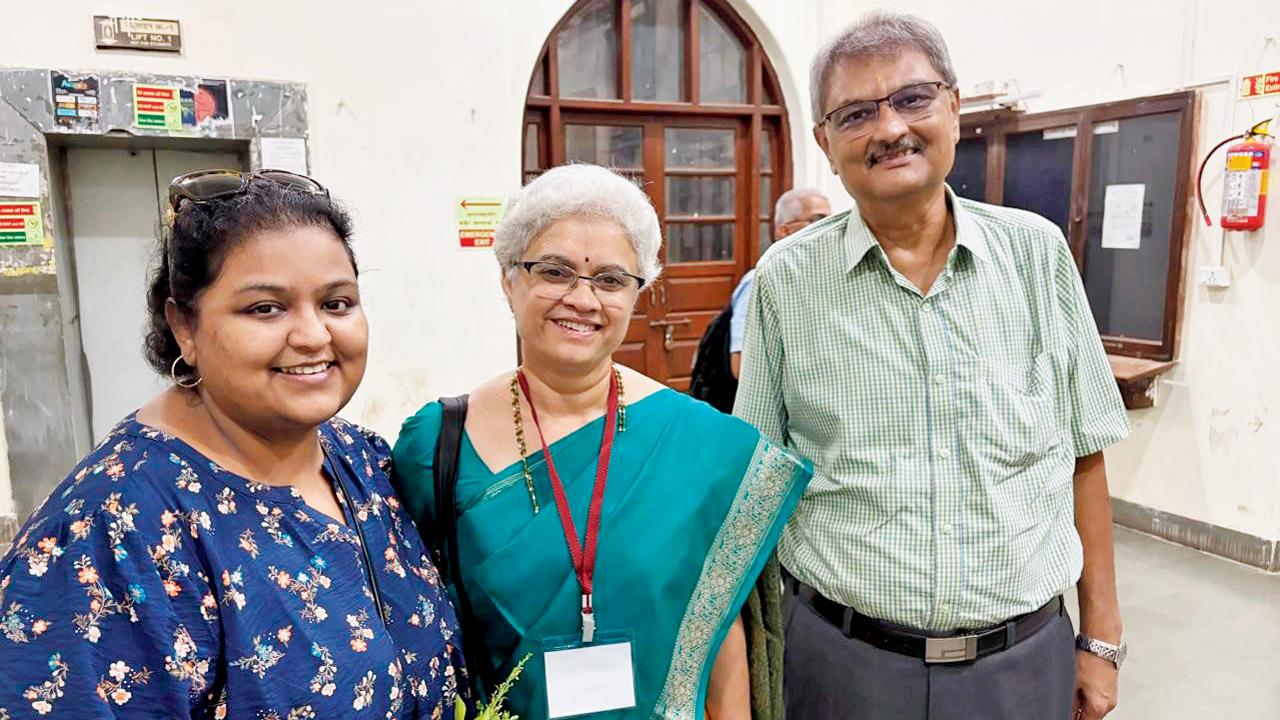
(From left) Asmi, Dr Anita Mahadevan, and Vijay Shah at KEM hospital in June. Pic courtesy/By Asmi Shah
Progressive supranuclear palsy (PSP) causes profound and irreversible damage to the brain, often before a diagnosis is even made. Unlike ALS or Parkinson’s, PSP gradually affects balance, eyesight, and cognition due to the accumulation of tau protein in vital areas of the brain. The damage is small, but the impact on patients and their families is devastating. Yet, amid the loss, lies an opportunity for learning.
Brain donation is an empowering and deeply meaningful act, one that could pave the way for future PSP treatments. But this potential hinges on awareness and early planning. In India, brain donation for research is a little-known option. Families often face confusion, legal ambiguity, and difficult decisions during an already painful time.
However, with timely counselling and support from institutions like the National Institute of Mental Health and Neuro Sciences (NIMHANS) Brain Bank, such donations are not only possible but invaluable.
Read Next Story
Trending Stories
Latest Photos
Latest Videos
Latest Web Stories
ADVERTISEMENT
Mid-Day Fast
ADVERTISEMENT

ADVERTISEMENT