






Can we come together as a nation?
Updated On: 15 August, 2025 07:01 AM IST | Mumbai | Rosalyn D`mello
We must unite to rise above propaganda, resist the rhetoric of hate, and focus our energies on creating more equitable living conditions for the most vulnerable members of our society before it’s too late

Listen to this article :
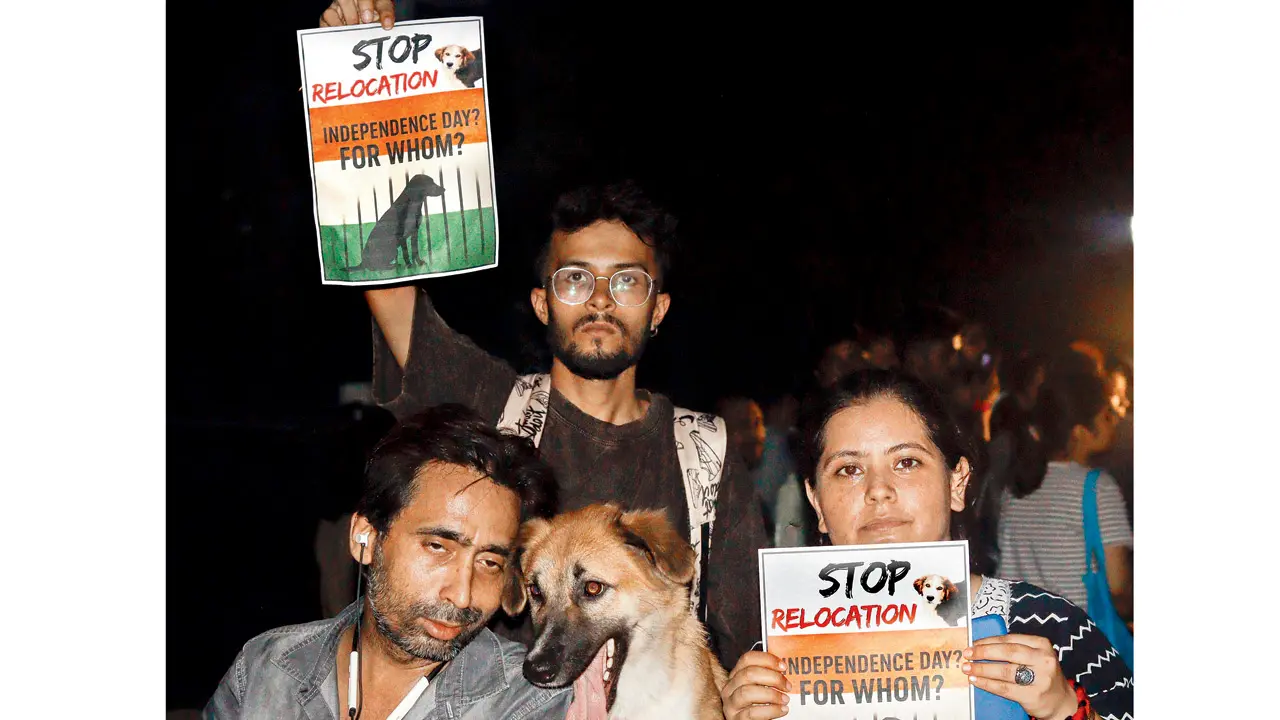
People hold placards during a protest in solidarity with stray dogs, at Lodhi Garden in New Delhi, on August 14. It’s heart-warming to see civil society mobilise against the ruling advocating the forced eviction of Delhi’s stray canines. PIC/PTI
 August is the cruellest month, where I live. The temperatures soar suddenly, and the body sweats like it is in survival mode. The desi in me nurses an instinct to find the nearest air conditioning… my go-to hack for surviving the Delhi heat (I preferred to spend on a coffee in a café than to run the AC in my apartment). Except, artificial sources of ventilation are simply not a thing in the Alps — and I dread the day when it becomes commonplace. The most affordable remedial strategy here, at the peak of summer, is to station oneself at the community swimming pool. This year, my partner and I each bought a season pass so we could go there at will. When you enter, it’s easy to find a shady spot on the many sprawling, grassy, tree-lined lawns.
This year, there are at least four desi people working in the pool’s café. I hear snatches of Hindi and Punjabi, and my heart melts. Sometimes, I am inclined to ask if they might make me a chai if I pay an extra euro. Yesterday, the line to the cash counter was snaky long — it was that hot, and everyone in Tramin with kids had sought refuge in the pool. As I waited for the macchiato, I noticed one of the desi staff struggling to open a wine bottle with a corkscrew. The customer who had ordered the wine volunteered to do it himself, and the white bar manager laughed and asked the desi staff person to simply hand it over. The other desi staff member laughed at him and joked in Punjabi about his inability to open a wine bottle. I had only empathy for him, because, despite living in a wine region for more than five years, I suck at uncorking wine. Perhaps, because in my university years I got so adept at opening bottles with either shoes or car keys, I got into my own head about the corkscrew getting stuck, so I always get so nervous and anxious about the whole affair. I’m also spoiled because when I drink a glass, it’s usually with family. Usually, my father-in-law or my partner does the deed. All I need to do is sip and re-serve. I felt for this desi server, because the only way he to be adept at opening wine bottles is to practise with the right technique, but I imagined, after this instance, self-doubt already creeping into his body, making him second-guess himself.
These small, slight missteps constitute the many aspects of dislocation that we rarely talk about when we consider the immigrant experience. I’ve been thinking about dislocation a lot, especially in the light of the horrors unfolding in Gaza, as well as current affairs in India — the way people in possession of documents are being treated if they do not belong to the majority and the increasing cruelty towards the animal world in our urban centres in the name of spatial purity. When it comes to imagining solutions to urban development fiascos, our civic brains seem too readily aligned with the idea of extermination — the founding vocabulary for perpetuating genocide. Instead of brainstorming ways to cohabit, the norm is for a more powerful group of people to decide, on behalf of everyone else, who gets to live and under what conditions. Anyone who doesn’t conform to the right parameters must either willingly vacate or be forcibly removed and shipped off to an elsewhere place that frequently doesn’t even exist. It’s such a disconcerting trend, especially in a nation that prides itself on its democratic ideals.
Read Next Story
Trending Stories
Latest Photos
Latest Videos
Latest Web Stories
ADVERTISEMENT
Mid-Day Fast
ADVERTISEMENT

ADVERTISEMENT