






Fight, flight and freeze responses of faith
Updated On: 17 November, 2024 07:41 AM IST | Mumbai | Devdutt Pattanaik
The oldest form of Buddhism was a rejection of the world. It was a flee response.

Listen to this article :
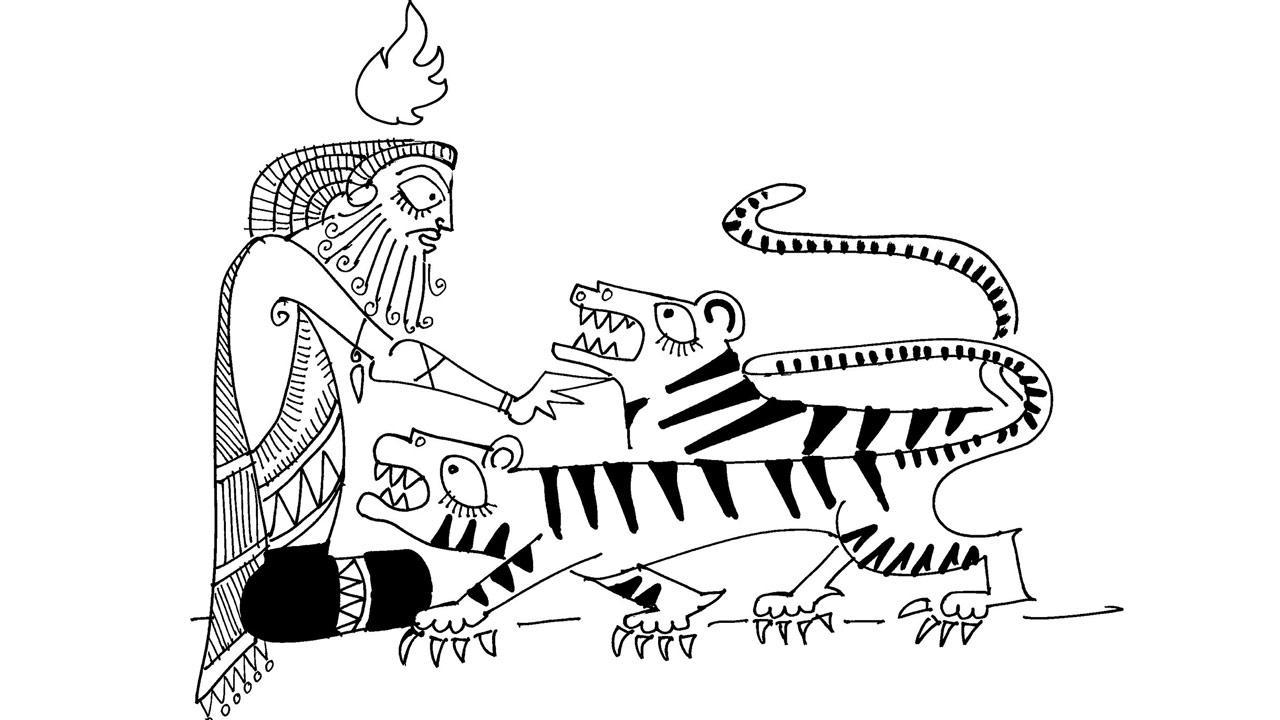
Illustration/Devdutt Pattanaik
 When a human being is confronted with a problem, we either flee, freeze or fight. This is a physiological stress response, seen even in animals when confronted with a threat. In humans, our imagination transforms this natural response into expressions of faith. And so, we find that religions around the world offer three kinds of solutions: flee from the world through mysticism, freeze in the world through devotion, fight the world with occult practices. In different proportions, we find these three paths in all religions.
The oldest form of Buddhism was a rejection of the world. It was a flee response. It was monastic. It sought to withdraw from nature and culture, wanting to outgrow not just social responsibilities but hunger, too. This was called Nikaya Buddhism, similar to Vedanta, the monastic strain of Hinduism which is more philosophical, and popular amongst Hindu hermits. Christian monks and Sufi mystics embody the flight response of their respective faiths. They speak of union of the finite individual with the infinite divine. This was also the most intellectual side of religion.
Read Next Story
Trending Stories
Latest Photos
Latest Videos
Latest Web Stories
ADVERTISEMENT
Mid-Day Fast
ADVERTISEMENT

ADVERTISEMENT