






Honouring the Marathi novel, that has echoes worldwide
Updated On: 23 February, 2025 07:57 AM IST | Mumbai | Sumedha Raikar Mhatre
What better occasion than the upcoming Marathi Language Day on February 27 to celebrate the Marathi novel—rooted in its middle-classness, yet rising to reach a global audience!

Listen to this article :
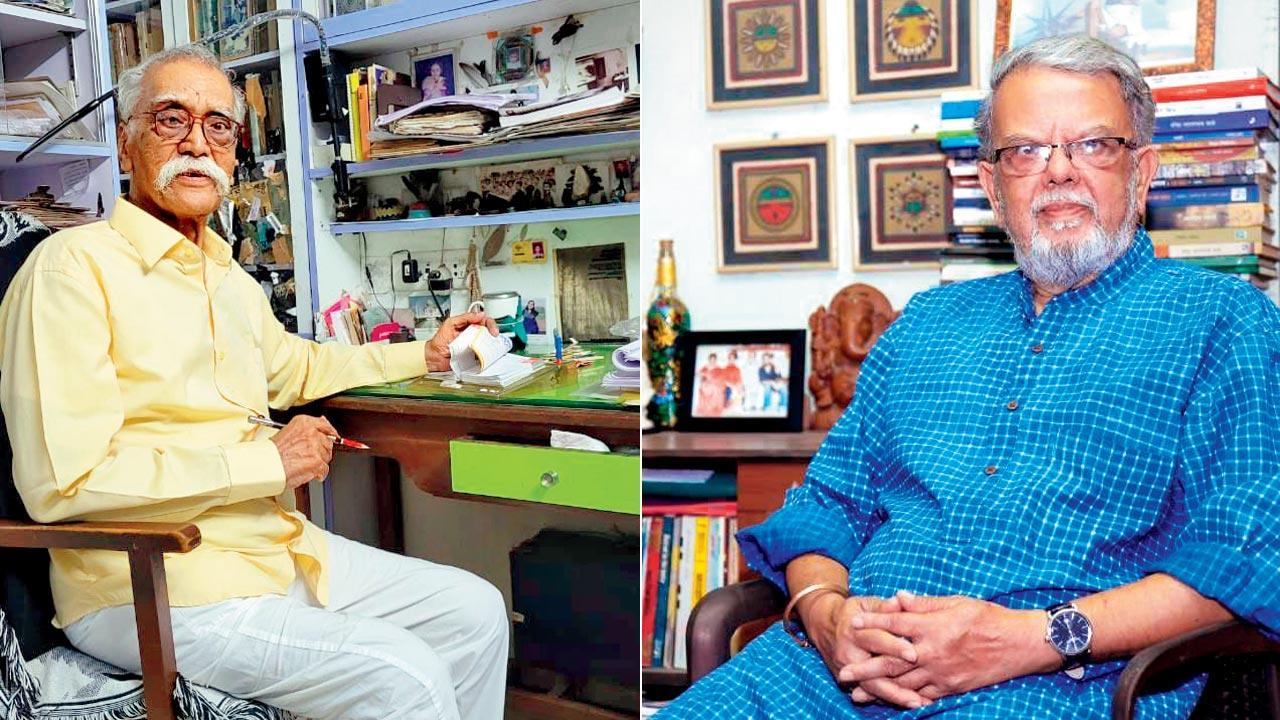
Bhalchandra Nemade’s Kosala (1970) receives special focus in the new volume. It dissects the Marathi ethos through college student Pandurang Sangvikar; (right) In Swatantryottar Marathi Kadambari, author Avinash Sapre traces the post-Independence evolution of the Marathi novel
 Thomas C Foster’s How to Read Novels Like a Professor includes an oft-quoted line: “Novels aren’t about heroes. They’re about us.” He emphasises how novels resonate by capturing everyday struggles and aspirations. This insight feels especially relevant to Swatantryottar Marathi Kadambari (Shabdalaya Prakashan), where critic and English professor Avinash Sapre traces the post-Independence evolution of the Marathi novel. From Baba Padmanji’s Yamuna Paryatan (1857)—widely considered the first Marathi novel—to contemporary works like Bhalchandra Nemade’s Hindu (2013), Sapre explores how the form has chronicled the transformations of Marathi-speaking people.
As Marathi Language Day approaches on February 27, especially in light of Marathi’s recent recognition as a classical language, the book reminds us how the Marathi novel has pushed boundaries—reflecting and reimagining realities—while also highlighting where it must outdo itself. Iconic works like VS Khandekar’s Yayati (a reinterpretation of mythology), Bhau Padhye’s Rada and Vasunaka (uncovering Mumbai’s underbelly), Kamal Desai’s Kala Surya Aani Hat Ghalnari Bai (an assertion of female individuality), Rangnath Pathare’s Saatpatil Kulvruttant (an epic spanning seven centuries), and Nemade’s Kosala (capturing the existential angst of a young protagonist) exemplify this transformation.
Read Next Story
Trending Stories
Latest Photos
Latest Videos
Latest Web Stories
ADVERTISEMENT
Mid-Day Fast
ADVERTISEMENT

ADVERTISEMENT