






India’s mosques under siege: how history is being weaponised
Updated On: 02 December, 2024 07:13 AM IST | Mumbai | Ajaz Ashraf
None of the petitions pleading for surveying the mosques should have been entertained by the judiciary, for the Places of Worship Act, 1991, freezes the religious character of sacred places as it existed on August 15, 1947

Listen to this article :
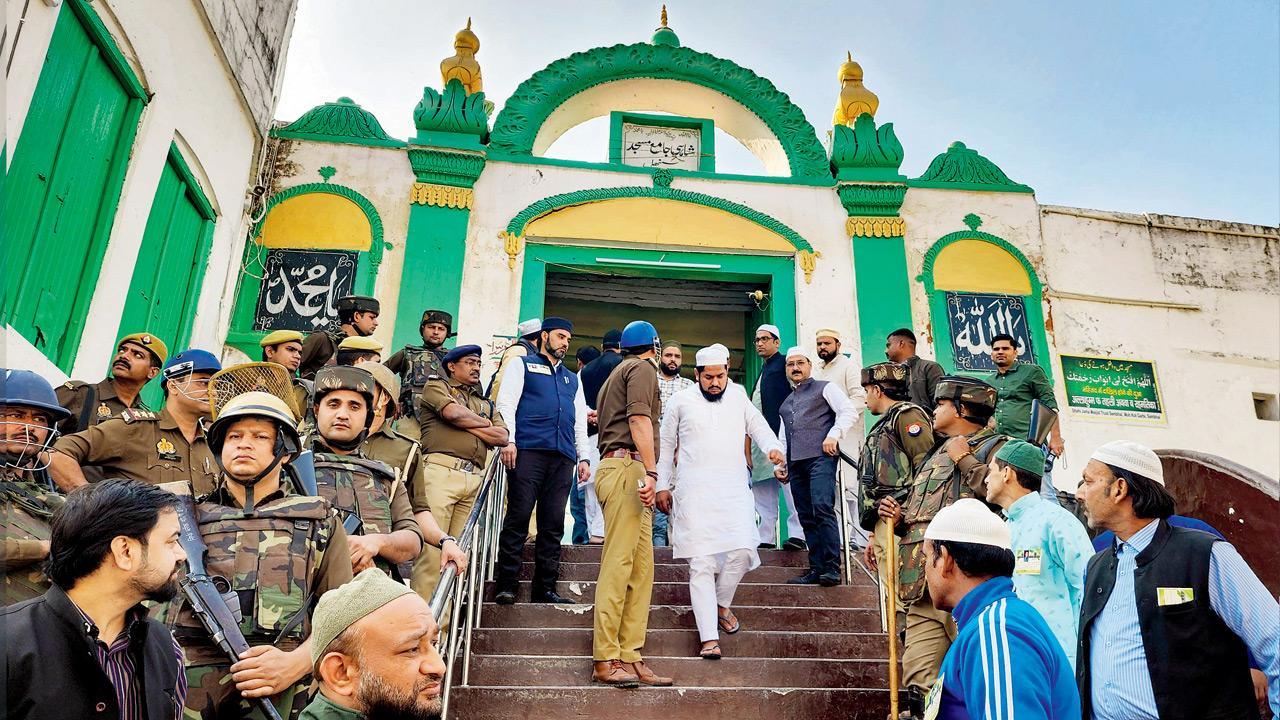
Devotees leave after offering prayers at the Shahi Jama Masjid amid tight security, in Sambhal, on November 29. Pic/PTI
 A darkled future awaits India, and particularly Muslims, as a segment of the judiciary facilitates Hindutva to appropriate mosques claimed to have been built over temples after these were demolished by Muslim rulers centuries ago. Righting the “wrongs of history” has been one of the defining attributes of Hindutva. This process has been given a fillip because of judicial orders permitting surveys of mosques for determining whether these were originally temples.
It was thought the building of the Ram Temple where the Babri Masjid once stood in Ayodhya would end the culture of manufacturing disputes over places of worship. The Gyanvapi mosque in Varanasi and the Shahi Idgah in Mathura have always been in Hindutva’s crosshairs. But what is happening now, courtesy of judicial orders, is that little-known mosques in nondescript districts have become targets to be reclaimed as temples.
Read Next Story
Trending Stories
Latest Photos
Latest Videos
Latest Web Stories
ADVERTISEMENT
Mid-Day Fast
ADVERTISEMENT

ADVERTISEMENT