






The privilege of learning through play
Updated On: 23 May, 2025 06:56 AM IST | Mumbai | Rosalyn D`mello
I wonder what I could have been if, like our firstborn, I had access to world-class educational facilities without my parents having had to burn a hole in their pockets?

Listen to this article :
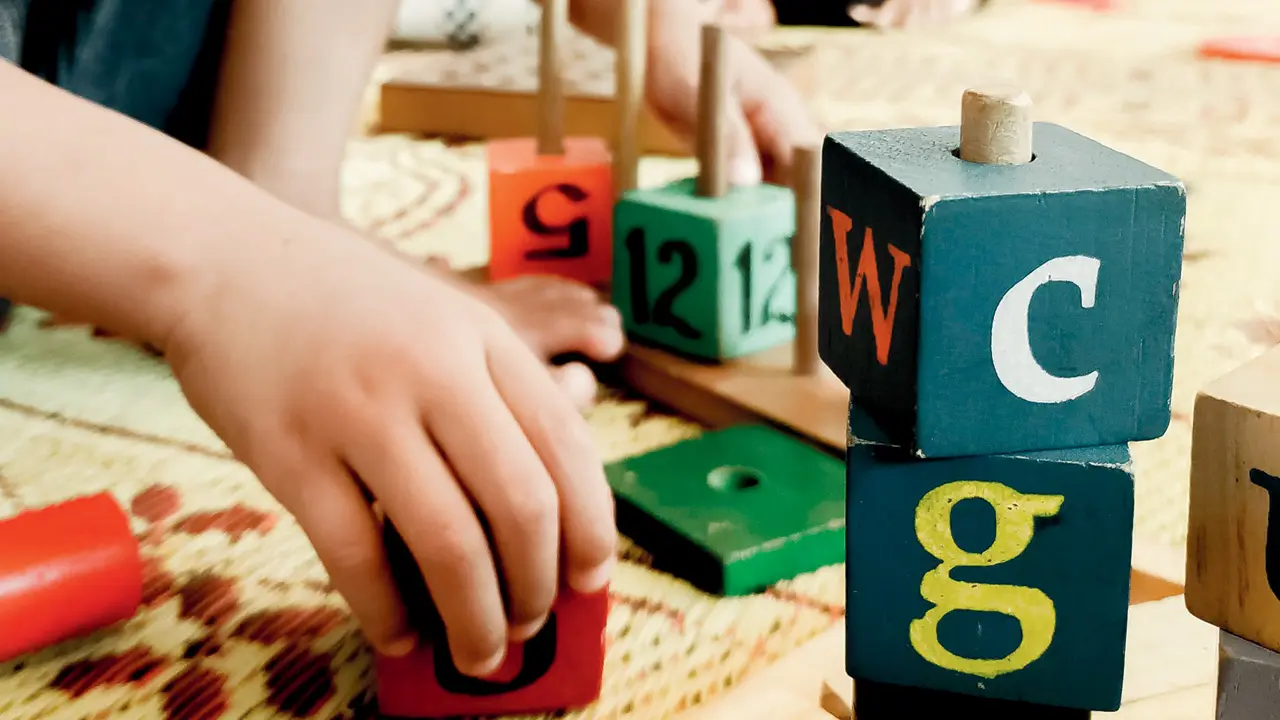
The kindergarten our son will attend seems to holistically endorse Maria Montessori’s philosophies. Representation Pic/iStock
 Yesterday afternoon, we visited the kindergarten that our firstborn will begin attending from September. I’d only ever seen it from the outside, peeping occasionally into the gym room whenever the occasion presented itself. Having only ever encountered the building from the outside, I hadn’t imagined that the interiors could be so expansive. I assumed it was cramped, because the town decided to build an annexe next door on the site of the erstwhile fire station. But really, the extension is designed to expand possibilities.
Shortly into our visit, I felt like a kid in a candy store, utterly fascinated by the inviting nature of the space, a little lost between the myriad rooms, each hosting an elaborate range of activities designed to engage toddlers and preschoolers. I had flashbacks to my time in junior and senior KG in Kurla, which, unlike the Montessori system, followed a classroom structure. We sat on benches in a class facing the teacher, who taught us what it was felt we needed to know using a blackboard. We didn’t have games or tactile activities. We learned shapes and patterns, and how to recreate them on paper. By the time we were done with senior KG, we had already learned cursive writing. I know we sang a lot of songs and played a lot outdoors, but we didn’t have access to an alphabet library or a sewing station, nor did we have opportunities to do collage work or refine our fine motor skills with scissors. One of the rooms at our son’s future kindergarten had a counter with magnifying glasses, slides and a whole area dedicated to natural history. In the same room were tables and chairs around which they could mould with play dough, play with magnetic tiles, make patterns with different-sized and coloured wooden cubes, and play with dice to learn numbers. There was one room dedicated to alphabets, and I saw alphabet blocks in different forms, shapes and sizes that the kids could use to familiarise themselves with writing. One tiny room that served as a bridge between two rooms held a hospital-style bed. It was designed for kids to act like either doctors, nurses or patients. Upstairs was a woodworking station where they could use real tools under supervision. Another vast room was called Dreamland, a cinema for book projections and shadow puppetry. Adjacent to it was a small music room with a range of instruments. Besides an outdoor play area, there was an indoor gym with a ball pool, space for Bobby Cars, a slide and other equipment. We also surveyed the kitchen, where their daily meals are cooked. Our toddler is already a fan of the cooking — he gets the same fare at the daycare — a well-balanced diet with lots of vegetables, fruits, meat, fish, rice, pasta and once a week, dessert.
Read Next Story
Trending Stories
Latest Photos
Latest Videos
Latest Web Stories
ADVERTISEMENT
Mid-Day Fast
ADVERTISEMENT

ADVERTISEMENT