






Why Kubera is not Ganesha
Updated On: 22 June, 2025 06:56 AM IST | Mumbai | Devdutt Pattanaik
So war-rooms are being established in schools and enterprises, in homes even, to survive in the dog-eat-dog world, the rat-race, the shark tank

Listen to this article :
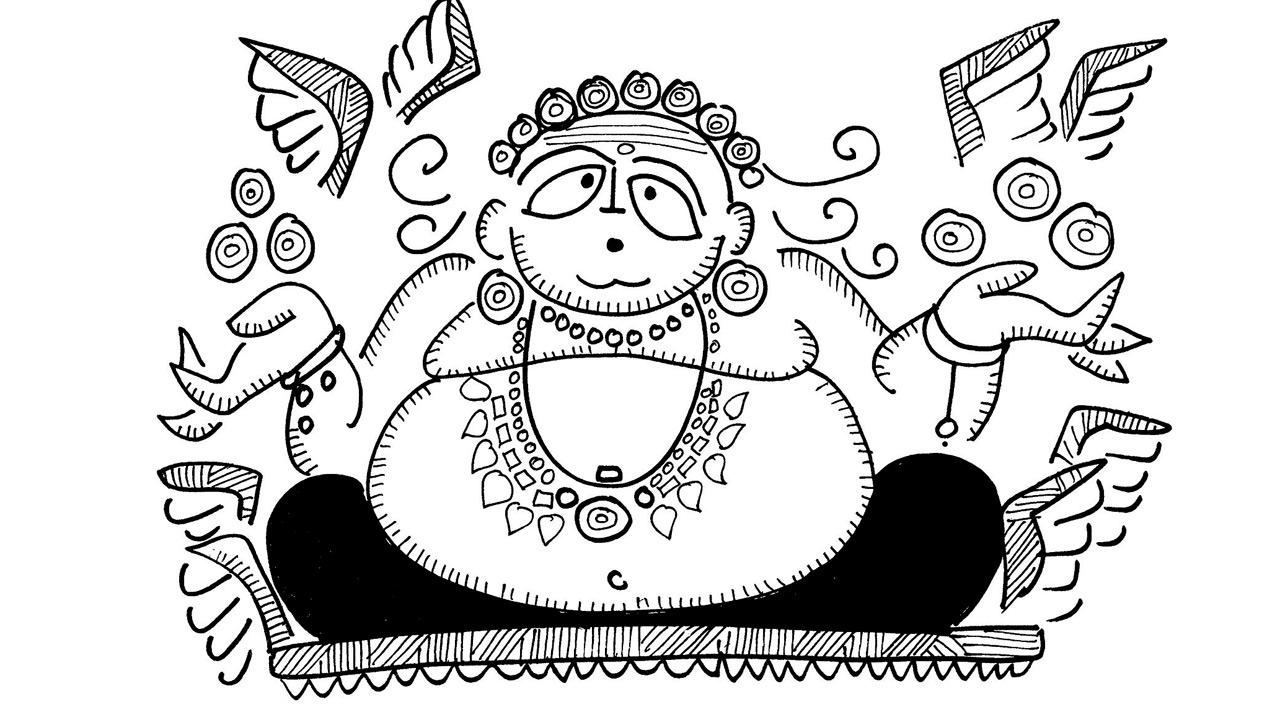
Illustration/Devdutt Pattanaik
 Contentment is a bad word in schools and businesses today. Makes us complacent, say the rich. Tricks us into exploitation, say the poor. Prevents growth, say all. On the other hand, hunger is the good word — marketed as ambition. Makes us competitive, say the rich. Makes us ambitious, says the poor. Promotes growth, says all.
Modern culture rewards the eternally ravenous, the always competitive, who yearn for more and more resources, power, attention, glamour and victory, like the demon Baka-asura of Indian myth, for whom everything and everyone is an opportunity to be consumed. So war-rooms are being established in schools and enterprises, in homes even, to survive in the dog-eat-dog world, the rat-race, the shark tank.
Across Hindu, Buddhist and Jain shrines one finds images of corpulent bejeweled beings, symbols of prosperity. Popular amongst them are Ganesha, with his rat, and Kubera, with his mongoose. Kubera is the treasurer of the gods. Ganesha is the remover of obstacles. But while Kubera is just a Gana, a follower of Shiva. Ganesha is venerated as lord of all Ganas, son of Shiva. This story explains why:
Trending Stories
Latest Photos
Latest Videos
Latest Web Stories
ADVERTISEMENT
Mid-Day Fast
ADVERTISEMENT

ADVERTISEMENT