






Home / News / World News / Article /
‘Biological activity on exoplanet may change our perspective’
Updated On: 19 April, 2025 08:33 AM IST | Cambridge | Agencies
The molecules, produced on Earth by marine organisms, are considered predictors of life

Listen to this article :
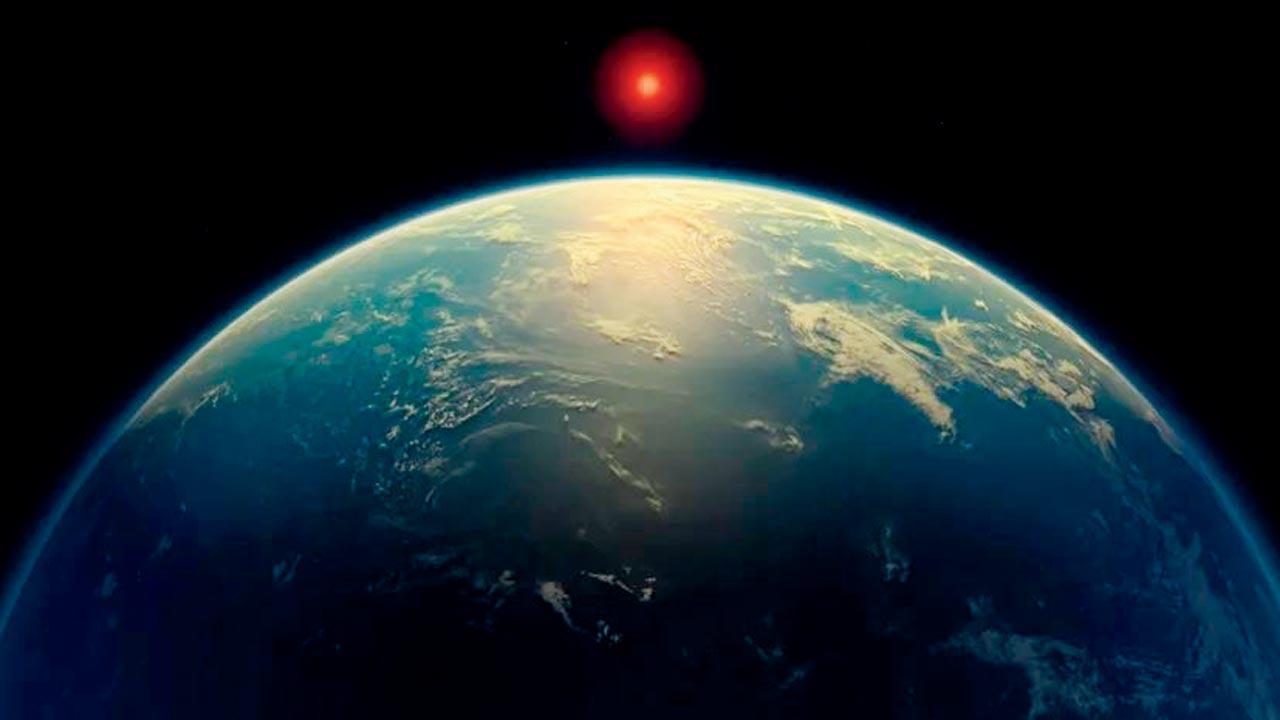
Artist’s impression of the exoplanet K2-18b. Pic/Cambridge University
Evidence of biological activity outside the solar system can potentially change the way the night sky is fundamentally perceived, from seeing it as a physical, inanimate sky to thinking of it as a “living sky”, astrophysicist Nikku Madhusudhan has said.
A professor of astrophysics and exoplanetary science at the University of Cambridge, Madhusudhan is the lead researcher on a study that has found fingerprints of dimethyl sulphide and dimethyl disulphide molecules on an exoplanet—K2-18 b—about 120 light years from Earth. The molecules, known to be produced on Earth by marine organisms, are considered predictors of life or habitability on exoplanets. The results of the study are the strongest signs yet of life outside the solar system.
Trending Stories
Latest Photos
Latest Videos
Latest Web Stories
ADVERTISEMENT
Mid-Day Fast
ADVERTISEMENT

ADVERTISEMENT