






Home / Sunday-mid-day / / Article /
Fuelling the future of rocket science
Updated On: 25 May, 2025 12:20 PM IST | Mumbai | Nishant Sahdev
With semi-cryogenic propulsion, India is leapfrogging into the technologies of tomorrow

Listen to this article :
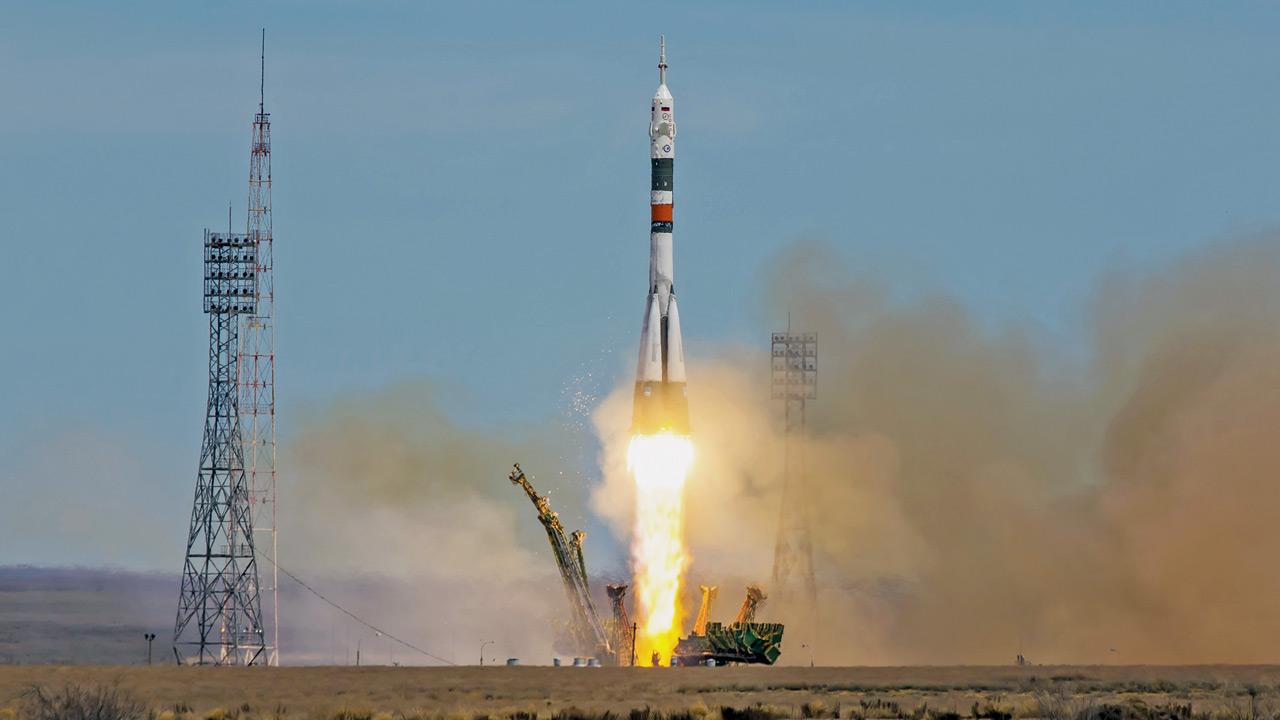
The 2017 launch of Soyuz MS-04 to the international space station from Baikonur in Kazakhstan. Pic/iStock
WHEN you think of a rocket launch, you probably imagine thunder, fire, and a blinding plume of smoke. But what makes that magic happen? It’s not just brute force — it’s precision chemistry. For decades, India’s rockets have relied on cryogenic engines — high-tech machines that burn ultra-cold liquid hydrogen and oxygen. But now, there’s a quiet revolution happening in Indian space labs, and it’s pointing in a new direction: semi-cryogenic engines. During my recent visit to India’s Space Centre, I spoke with ISRO scientists and founders of space startups across Bengaluru and Hyderabad. One thing stood out: everyone is talking about semi-cryogenic. And for good reason — it’s the tech that could change everything.
Rockets are all about power — and the type of fuel they burn plays a big role in how far they go. Traditional launchers often use solid or fully cryogenic engines. Cryogenic engines, like those used in ISRO’s Chandrayaan-3 mission, burn liquid hydrogen and liquid oxygen. They’re powerful but complex, especially because hydrogen must be stored at −253°C, demanding expensive insulation and precision systems.
Trending Stories
Latest Photos
Latest Videos
Latest Web Stories
ADVERTISEMENT
Mid-Day Fast
ADVERTISEMENT

ADVERTISEMENT