






Home / Sunday-mid-day / / Article /
Ganeshotsav 2025: To immerse or not to immerse PoP Ganpati idols into the sea?
Updated On: 03 August, 2025 08:33 AM IST | Mumbai | Akshita Maheshwari
As the High Court rules that Ganpati idols above 6 feet can be immersed into the sea, we ask environmentalists what this means for an already overburdened ecosystem into which we’re dumping tonnes of debris each year

Listen to this article :
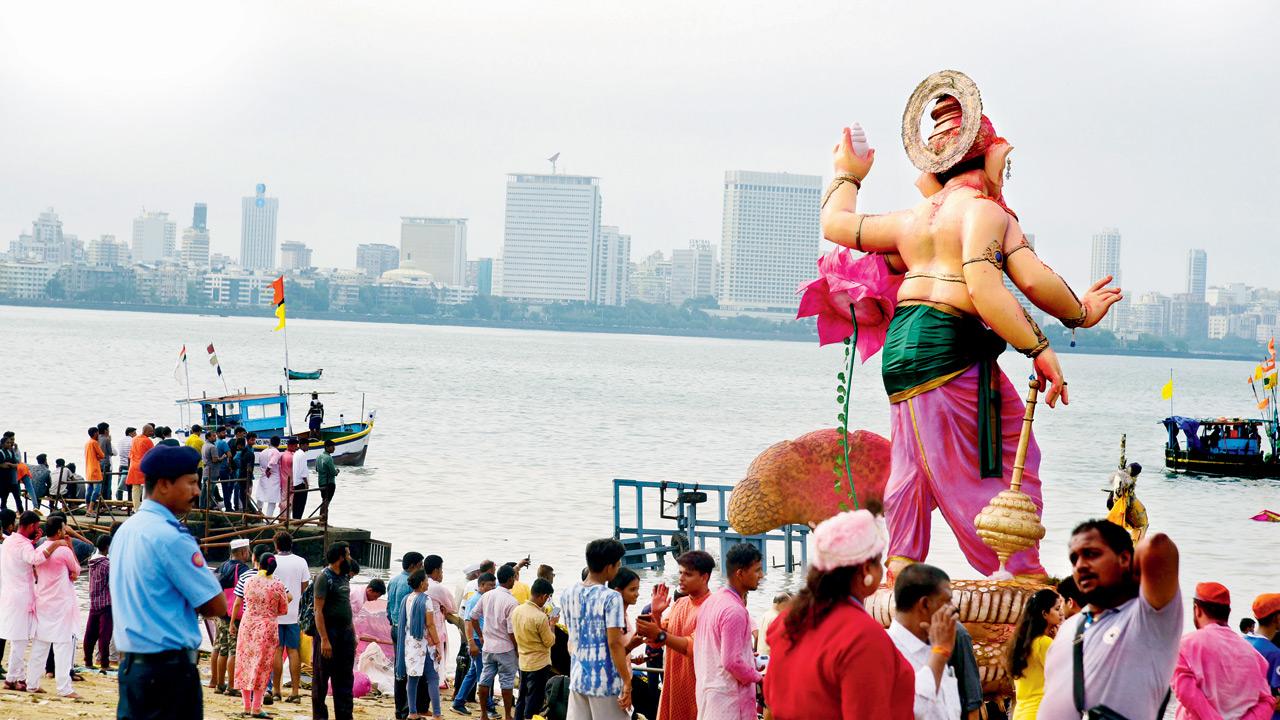
A Ganesha idol is taken for immersion at Chowpatty on the final day of the 10-day Ganesh Chaturthi festival in 2022. FILE PIC/ATUL KAMBLE
In Mumbai one can often forget the meaning of the word rest. And it makes sense that this hustle translates to the city’s biggest festival, Ganesh Chaturthi, when the city literally comes alive as it dances in the worship of the Lord.
The flip side of the coin is the aftermath of this festival. Activists have long argued about the environmental damage caused by the traditional visarjan (immersion) of Ganpati idols into the sea. But last week, as Bombay High Court gave a go-ahead to immersion of idols that are taller than 6 feet to be immersed into the sea, a big part of the city may be celebrating, but another side breathes a sigh of frustration, pondering the ecological damage this will cause.
Historian Sandeep Dahisarkar says, “The story goes that when Lokmanya Tilak saw how Ganpati brought people together in Gwalior, he wanted to revive it in Maharashtra to bring people together.”
Trending Stories
Latest Photos
Latest Videos
Latest Web Stories
ADVERTISEMENT
Mid-Day Fast
ADVERTISEMENT

ADVERTISEMENT