






Home / Sunday-mid-day / / Article /
How these Indians overcame disability to conquer Mount Everest base camp
Updated On: 08 December, 2024 09:35 AM IST | Mumbai | Team SMD
Anusha Subramanian, part of the team that guided a visually challenged mountaineer and another climber with a physical disability to Everest Base Camp, says that the experience made her realise that inclusion goes beyond accessibility—it’s about creating a sense of belonging

Listen to this article :
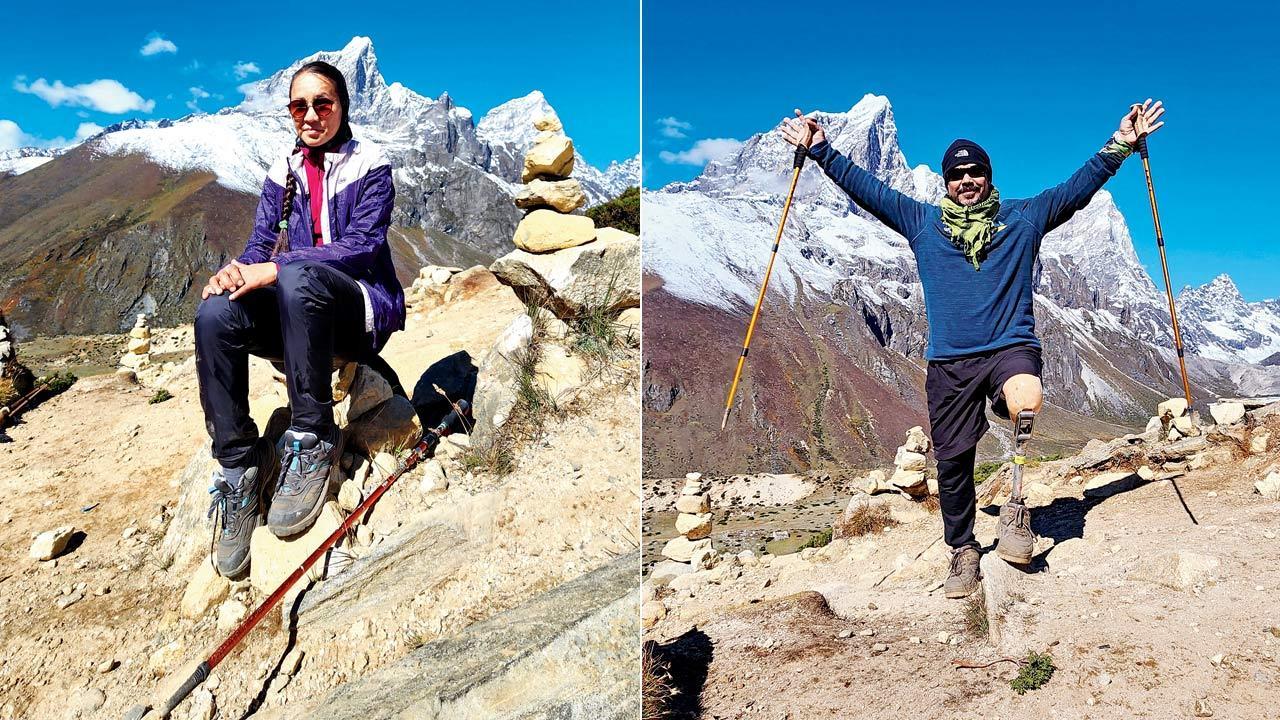
Chhonzin Angmo, who is visually challenged; (right) Vinod Rawat is a unilateral above-knee amputee
On October 6, the rugged trails of the Nepal Himalayas witnessed a transformative moment in adventure sports and inclusivity. Chhonzin Angmo, a visually challenged mountaineer from Kinnaur, Himachal Pradesh, became the first blind Indian woman to conquer the Everest Base Camp trek. Alongside her was Vinod Rawat, a unilateral above-knee amputee from Mumbai. Together, their journey spanned 132 km, from Lukla to Everest Base Camp and back, challenging societal notions of ability and resilience. On December 3rd, International Disability Day, Chhonzin Angmo and Tinkesh Ability Foundation (TAF) founder Tinkesh Kaushik were honoured with the National Award by the President of India for their inspiring contributions.
Guiding this historic expedition was a privilege I shared with my colleague, Guneet Puri, under the banner of Bohemian Adventures LLP, in collaboration with TAF. This trek was not just a physical challenge but a testament to what can be achieved when inclusion is prioritised. It also marked a significant milestone for both organisations. Bohemian Adventures, an all-woman-run adventure company, while TAF, a Goa-based NGO, supports persons with disabilities through mobility aids, fitness programmes, and awareness campaigns. Together, we redefined possibilities in adventure sports.
Trending Stories
Latest Photos
Latest Videos
Latest Web Stories
ADVERTISEMENT
Mid-Day Fast
ADVERTISEMENT

ADVERTISEMENT